
What Is a Radiologist? Salary, Training and Career Guide (UK)
Learn what a radiologist does, how to become one in the UK, salary expectations, training length, and whether radiology is a good career in medicine and healthcare.


A radiologist is a doctor who specialises in diagnosing and sometimes treating diseases using medical imaging. X-rays, CT scans, MRI scans, ultrasound scans and other imaging techniques are used to look inside the body and help other doctors understand what is causing a patient’s symptoms.
Radiologists usually work behind the scenes, but they play a crucial role in modern healthcare. Almost every hospital department relies on radiology, from emergency medicine and surgery to cancer care and paediatrics.
Quick answer
- Job title: Radiologist
- Field: Healthcare and Medicine
- Typical UK salary: £40,000–£130,000+
- Training length: About 10–15 years from starting medical school
- Main workplace: NHS hospitals and imaging centres
- Best for: Students interested in medicine, anatomy, technology and problem-solving
What does a radiologist do?
A radiologist examines medical images and writes reports that help doctors make diagnoses and treatment decisions.
Common daily tasks
- Interpreting X-rays, CT scans and MRI scans
- Identifying fractures, infections, cancers and other conditions
- Discussing findings with doctors and surgeons
- Advising on the most appropriate imaging test
- Performing image-guided procedures such as biopsies or injections
- Monitoring how diseases respond to treatment
For example, if a patient arrives in A&E with severe chest pain, a radiologist may interpret a CT scan to check for a blood clot in the lungs or an aortic problem.
What is the difference between a radiologist and a radiographer?
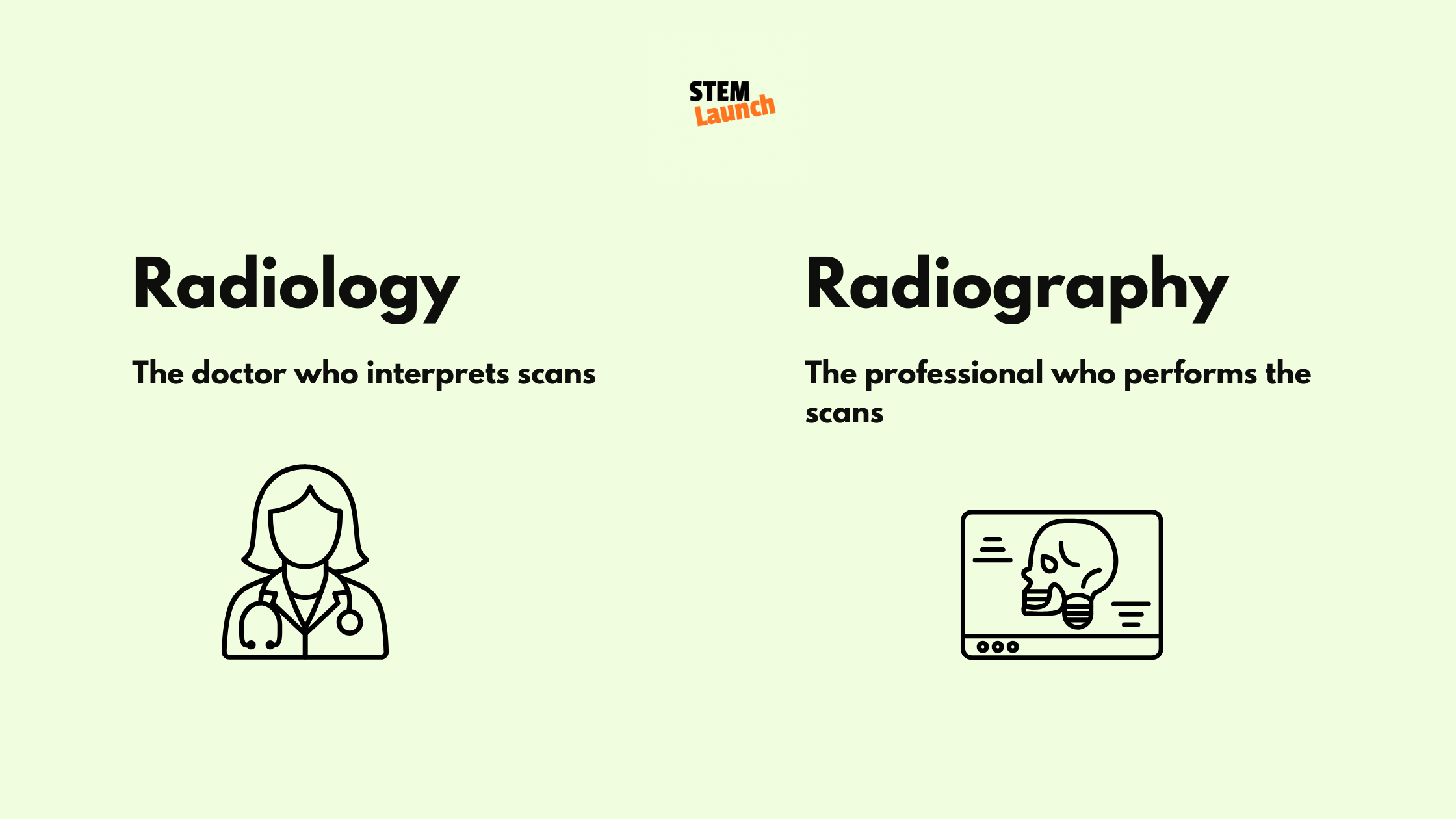
This is one of the most common questions.
| Radiologist | Radiographer |
|---|---|
| Medical doctor | Allied health professional |
| Diagnoses disease from scans | Operates imaging equipment |
| Completes medical school and specialist training | Completes a radiography degree |
| Can prescribe treatment and perform procedures | Produces the images for diagnosis |
Both roles are important, but the training pathway and responsibilities are very different.
What skills are needed?
Successful radiologists tend to have a combination of scientific, technical and communication skills.
Important skills
- Attention to detail
- Analytical thinking
- Strong anatomy knowledge
- Problem-solving
- Ability to work under pressure
- Clear communication with healthcare teams
- Interest in technology and imaging
A small abnormality on a scan can significantly change a patient’s treatment, so accuracy is essential.
How to become a radiologist in the UK
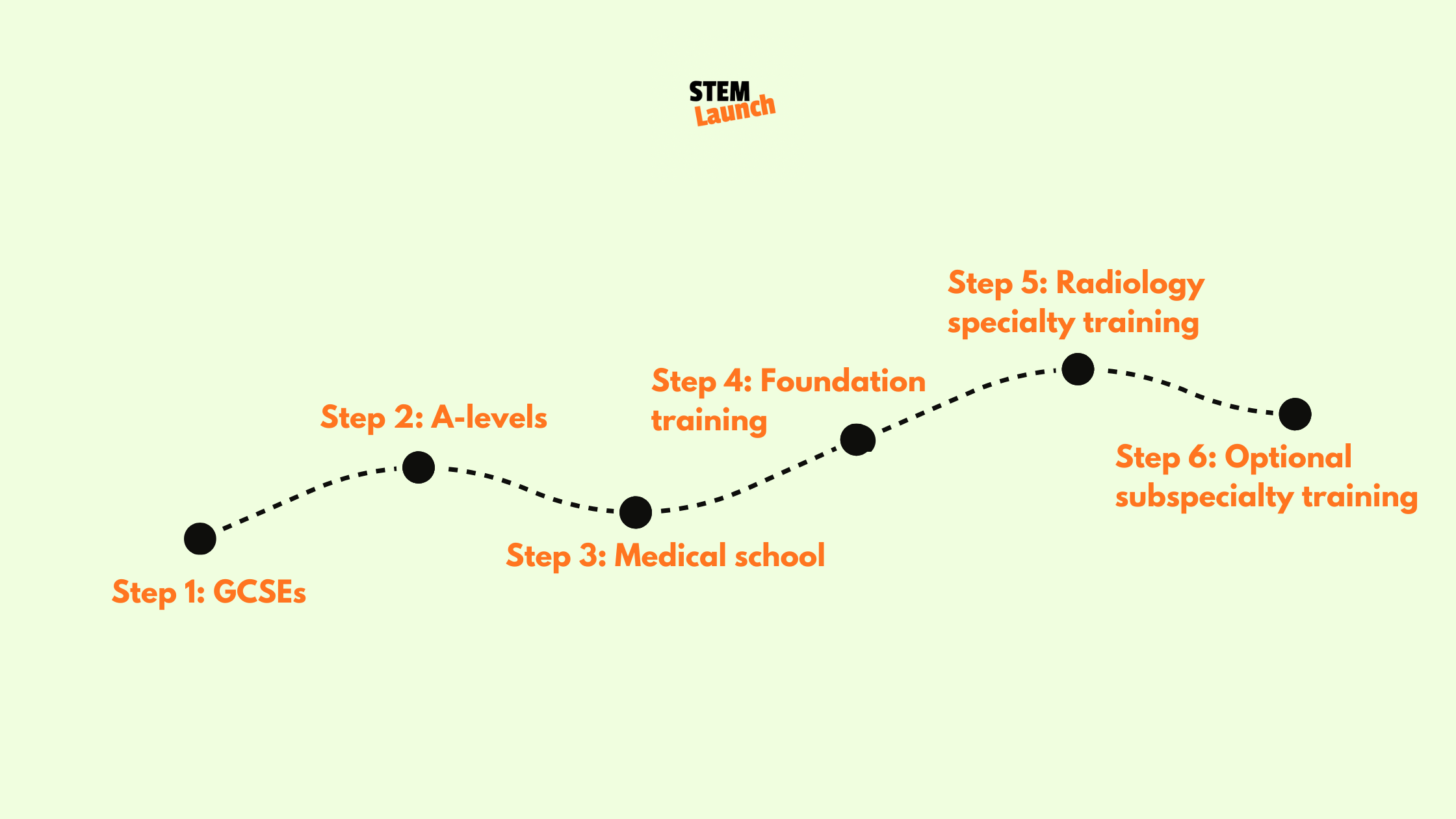
Step 1: GCSEs
Strong grades in science subjects, especially Biology, Chemistry, Physics and Maths, are helpful.
Step 2: A-levels
Most medical schools require Chemistry and usually another science such as Biology, Physics or Maths.
Step 3: Medical school
Complete a 5–6 year medical degree (MBBS or MBChB).
Step 4: Foundation training
Complete 2 years of Foundation Programme training as a junior doctor.
Step 5: Radiology specialty training
Apply for Radiology Specialty Training (ST1), which usually lasts 5 years.
Step 6: Optional subspecialty training
Many radiologists complete additional fellowship training in areas such as neuroradiology, musculoskeletal radiology, breast imaging or interventional radiology.
Overall, becoming a consultant radiologist typically takes 10–15 years after leaving school.
How much does a radiologist earn in the UK?
Salaries vary depending on experience and whether the role is in the NHS or private sector.
| Career stage | Typical salary |
| Foundation doctor | £37k–£45k |
| Radiology trainee | £45k–£65k+ |
| Consultant radiologist | £105k–£140k+ |
| Private practice/extra sessions | Potentially higher |
Radiology is generally considered one of the better-paid medical specialties.
Where do radiologists work?
Most radiologists work in:
- NHS hospitals
- Specialist imaging centres
- Cancer centres
- Private hospitals
- Academic and research institutions
Some experienced radiologists also undertake remote reporting from home for part of their workload.
Types of radiologist
Diagnostic radiologist
Interprets scans and provides diagnoses.
Interventional radiologist
Uses imaging guidance to perform minimally invasive procedures, such as draining abscesses or treating blocked blood vessels.
Paediatric radiologist
Specialises in imaging children.
Neuroradiologist
Focuses on the brain, spine and nervous system.
Musculoskeletal radiologist
Specialises in bones, joints and sports injuries.
What is the work-life balance like?
Radiology is often regarded as having a more predictable schedule than some hospital specialties, although emergency and on-call work is still common.
Advantages
- Less ward work
- Less overnight operating
- Flexible reporting opportunities
- Strong demand for specialists
Challenges
- High workload
- Need for sustained concentration
- Responsibility for important diagnoses
- Rapidly evolving imaging technology
Is radiology a good career?
Radiology can be an excellent career for students who enjoy medicine but are also interested in technology, imaging and diagnostic reasoning.
It may suit someone who enjoys:
- Science and medicine
- Anatomy
- Pattern recognition
- Using advanced technology
- Solving clinical puzzles
- Working as part of a healthcare team
It may be less suitable for someone who wants:
- Constant direct patient contact
- Frequent hands-on ward care
- A shorter training pathway
Future demand for radiologists
Demand for radiologists in the UK remains strong. An ageing population, increased use of imaging and advances in cancer and emergency care mean that hospitals require more imaging specialists than ever before.
Emerging technologies such as artificial intelligence (AI) are changing how images are analysed, but current evidence suggests AI is more likely to assist radiologists than replace them.
Frequently asked questions
Do radiologists see patients?
Yes, especially interventional radiologists, although diagnostic radiologists often have less direct patient contact than many other doctors.
Is radiology hard to get into?
Yes. Radiology specialty training is competitive and requires strong academic performance and clinical skills.
Can a radiologist work from home?
Some reporting work can be done remotely, particularly by experienced radiologists.
What subjects are best for becoming a radiologist?
Chemistry plus another science such as Biology, Physics or Maths are the most useful A-level choices.
Related healthcare careers
Students interested in radiology may also want to explore:
- Radiographer
- Biomedical Scientist
- Doctor
- Pathologist
- Medical Physicist
- Cardiologist
- Oncologist
Final thoughts
A radiologist is a medical doctor who uses imaging technology to diagnose disease and guide treatment. The career combines medicine, science and advanced technology, offers excellent long-term job prospects and plays a central role in almost every area of healthcare. For students interested in both medicine and technology, radiology is one of the most intellectually stimulating and future-focused careers in the NHS.
Not sure what STEM career is for you? Take our STEM Career Quiz now for FREE


